Replacing the software is relatively easy. Replacing the ecosystem around the software isn't.
No video selected
Select a video type in the sidebar.
The TechSpot article, “Denmark gives up on replacing Microsoft Office, for now” is essentially a story about how much harder it is to replace Microsoft Office in government than it looks on paper https://www.techspot.com/news/114327-denmark-gives-up-replacing-microsoft-office-now.html#google_vignette
Denmark's Ministry of Digitalization wanted to explore reducing its reliance on American software. Rather than immediately replacing Microsoft Office across the ministry, it ran a 38-person pilot starting in June 2025. Users replaced Word with Collabora, an open-source office suite based on LibreOffice, integrated by Danish company cBrain into its F2 government case-management system.
The test exposed lots of seemingly small compatibility problems:
- Word templates didn't translate cleanly.
- The Georgia font was initially missing.
- Letters sometimes became randomly bold.
- Extra line breaks appeared.
- Some Finance Ministry documents opened completely blank.
- Ctrl+P printed the application window instead of the document.
- One tester complained about the amount of time being spent fixing formatting
But Denmark's experience illustrates the problem:
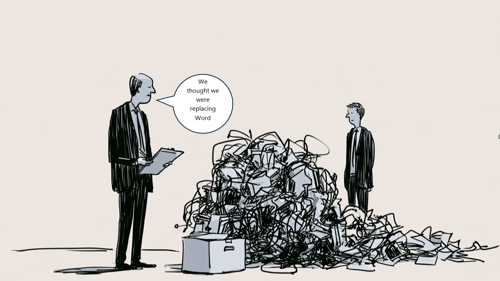
Replacing the software is relatively easy. Replacing the ecosystem around the software isn't.
MS Word isn't simply a word processor inside a large organization, as there are years of templates, fonts, document formats, workflows, integrations, macros, user habits and exchanges with other organizations built around it.
Basically, technology replacement gets the attention, but process dependencies determine whether the change works.
Denmark discovered that escaping Microsoft isn't a software migration. It's an organizational migration.